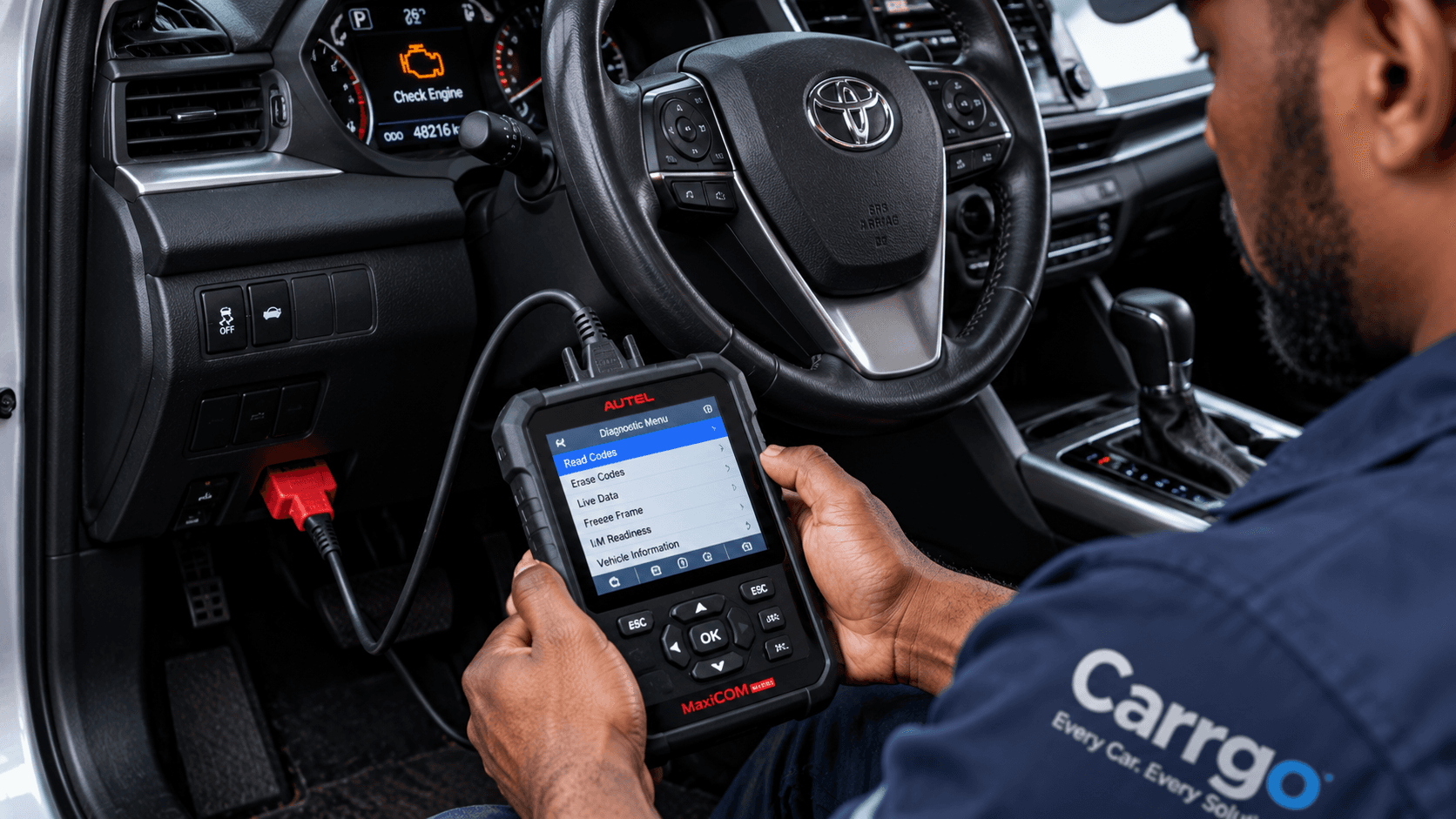
What is an OBD-II trouble code?
An OBD-II trouble code is a diagnostic code stored by a vehicle control module when it detects a condition outside the expected operating range.
A scan tool can retrieve these codes and provide valuable information about the system that needs further testing.
Understanding the code format
Most OBD-II diagnostic trouble codes begin with a letter followed by four numbers.
The first letter generally identifies the system involved.
- P — Powertrain
- B — Body
- C — Chassis
- U — Network or communication
A trouble code does not always identify the failed part
This is one of the most important things to understand about vehicle diagnostics.
For example, a sensor-related trouble code does not automatically mean that the sensor itself has failed. Wiring, connectors, power supply, ground, mechanical conditions, or another component can sometimes cause the same code.
Use the code as a starting point
Professional diagnosis combines the trouble code with symptoms, live data, electrical testing, mechanical inspection, and manufacturer specifications.
Carrgo's Trouble Code Center helps vehicle owners understand what a code means and what areas should be investigated next.