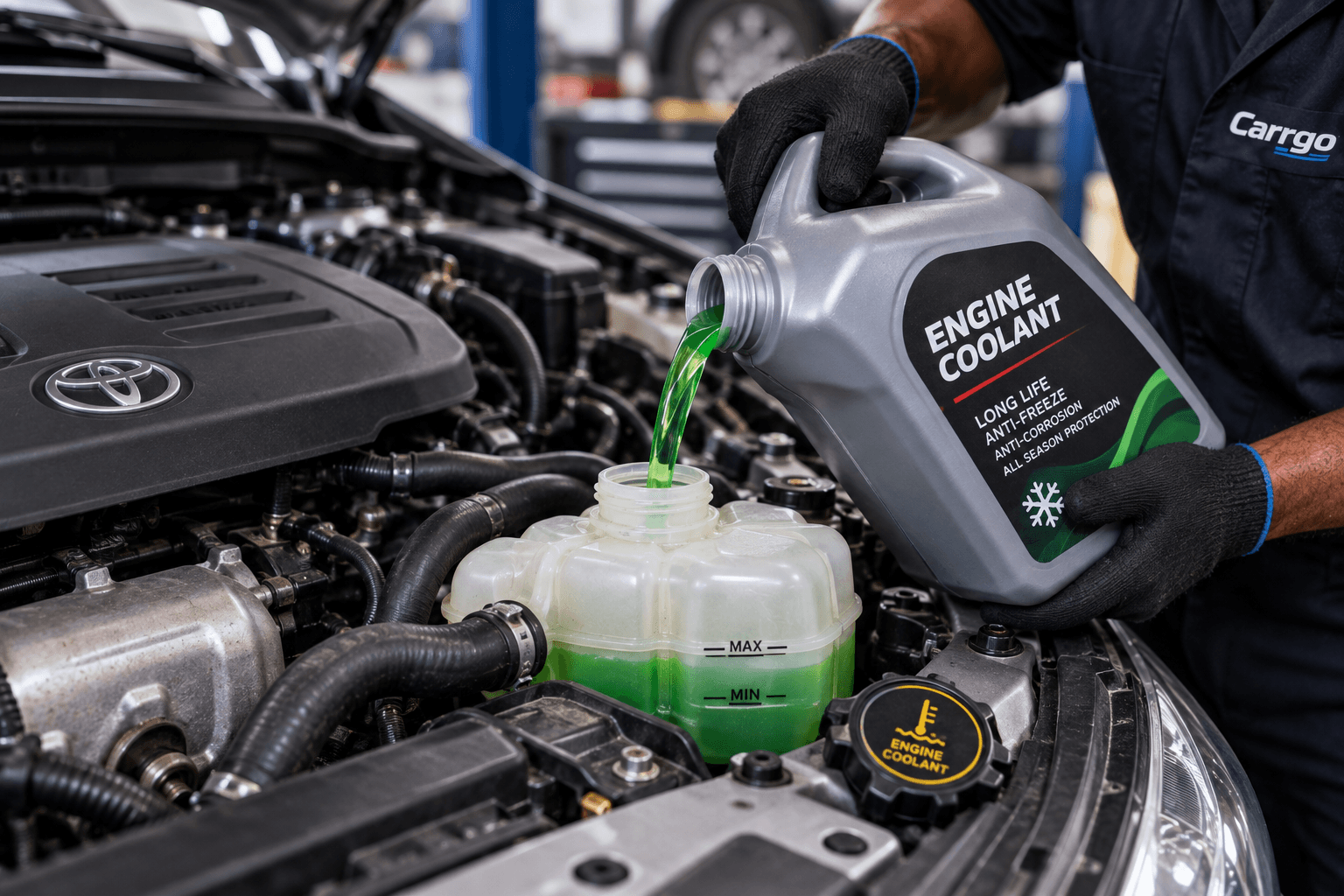
What is engine coolant?
Engine coolant is a specially formulated fluid that circulates through the engine and cooling system to help control engine temperature.
It is commonly mixed with water and contains additives designed to provide protection against corrosion, freezing, boiling, and other cooling-system problems.
Why does your engine need coolant?
An engine produces a large amount of heat while running. The cooling system removes excess heat and helps keep the engine operating within its intended temperature range.
Without proper coolant and a functioning cooling system, engine temperature can rise excessively and cause serious damage.
- Helps control engine temperature
- Transfers heat away from the engine
- Provides corrosion protection
- Helps protect cooling-system components
- Provides freeze and boil protection when correctly formulated
Signs of a coolant or cooling-system problem
- Engine temperature rising above normal
- Overheating warning on the dashboard
- Low coolant warning
- Coolant leaking under the vehicle
- Sweet-smelling coolant odor
- Steam or coolant escaping from the engine area
- Repeated need to add coolant
- Poor heater performance on some vehicles
Why does coolant level keep going down?
A cooling system should not normally require frequent coolant top-ups. If the coolant level repeatedly drops, there may be a leak or another underlying problem.
Leaks can occur from hoses, radiator components, the water pump, thermostat housing, expansion tank, radiator cap, or other parts of the cooling system.
Internal engine problems can also cause coolant loss, so repeated coolant loss should be properly diagnosed.
Can you use plain water instead of coolant?
Water can help in an emergency when the correct coolant is unavailable, but it should not normally be treated as a permanent replacement for the manufacturer's recommended coolant mixture.
The correct coolant type and mixture should be selected according to the vehicle manufacturer's specifications.
Do not mix coolant types blindly
Different vehicles may require different coolant formulations. Coolant color alone should not be used to determine compatibility because colors are not a universal specification.
Always check the vehicle manufacturer's recommended coolant specification before mixing or replacing coolant.
Never open a hot cooling system
A hot cooling system can be under significant pressure. Opening a hot radiator cap or coolant reservoir can release scalding coolant or steam and cause serious burns.
If the engine is overheating, safely stop the vehicle and allow it to cool before inspecting the cooling system.
Coolant is only one part of the cooling system
Adding coolant will not fix an overheating vehicle if another component is causing the problem.
A proper diagnosis may need to check the radiator, cooling fan, thermostat, water pump, hoses, radiator cap, coolant circulation, electrical controls, and possible leaks.
Carrgo Technician Tip
If your vehicle keeps losing coolant, do not simply keep topping it up and continue driving.
Find out where the coolant is going and why the cooling system is losing it. Early diagnosis can help prevent expensive engine damage.