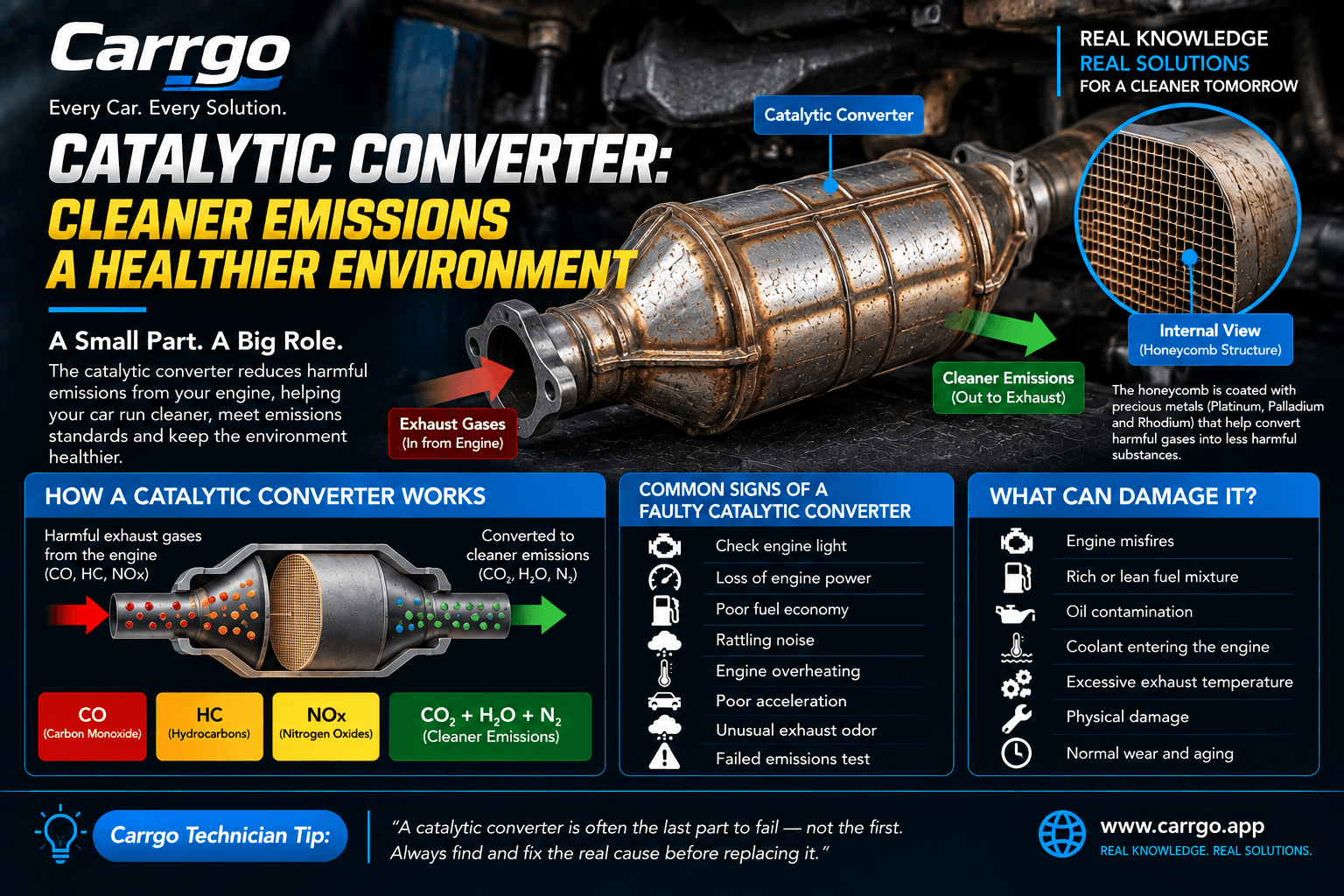
What is a catalytic converter?
A catalytic converter is an emissions-control component installed in a vehicle's exhaust system.
Its job is to help convert certain harmful pollutants in exhaust gases into less harmful substances before the gases leave the vehicle.
Why is the catalytic converter important?
A properly functioning catalytic converter helps reduce harmful exhaust emissions and allows the vehicle to meet applicable emissions requirements.
It works as part of the larger engine and emissions system and depends on the engine operating correctly.
What does a catalytic converter reduce?
- Carbon monoxide
- Unburned hydrocarbons
- Nitrogen oxides
Common signs of a catalytic converter problem
- Check engine light
- Loss of engine power
- Poor acceleration
- Poor fuel economy
- Rattling noise from the exhaust
- Unusual exhaust odor
- Engine overheating in some situations
- Failed emissions test
What can damage a catalytic converter?
A catalytic converter can be damaged by excessive heat or by engine problems that send abnormal amounts of unburned fuel or contaminants into the exhaust system.
The converter may therefore be the victim of another engine problem rather than the original cause of the vehicle's symptoms.
- Continuous engine misfires
- Incorrect air-fuel mixture
- Excessive unburned fuel
- Oil contamination
- Coolant entering the combustion chamber
- Physical damage
- Excessive exhaust temperature
A rattling catalytic converter should not be ignored
A rattling sound from the catalytic converter area can occur when the internal ceramic substrate or other internal components become damaged or loose.
A proper inspection is needed to determine whether the noise is actually coming from the catalytic converter or another part of the exhaust system.
Can a blocked catalytic converter reduce engine power?
A severely restricted exhaust system can interfere with the engine's ability to expel exhaust gases and may result in reduced performance.
Loss of power can have many other causes, so exhaust restriction should be confirmed with appropriate testing rather than assumed from symptoms alone.
How is a catalytic converter diagnosed?
Proper diagnosis may involve examining diagnostic information, oxygen-sensor or air-fuel-sensor data, exhaust conditions, engine performance, and the physical condition of the exhaust system.
- Scan for diagnostic information
- Check for engine misfires
- Inspect the exhaust system for leaks or damage
- Review oxygen-sensor or air-fuel-sensor data
- Check fuel-trim information where available
- Investigate possible exhaust restriction
- Check engine operating conditions
Do not replace the catalytic converter immediately
A catalytic converter can be expensive to replace, and replacing it without finding the underlying cause can result in another failure.
For example, an unresolved engine misfire or incorrect air-fuel mixture can damage a replacement converter.
Carrgo Technician Tip
A catalytic converter is often the last part in the chain—not necessarily the first part that failed.
If it is damaged, find out WHY it failed before installing another one. Fixing the root cause protects the replacement and prevents the same problem from returning.